
Kallikantzaroi: The mischievous spirits of the Twelve days
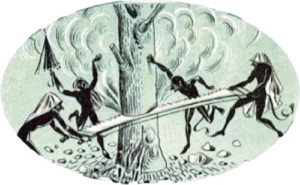 The Dodecahemeron brings more than celebration - it brings the Kallikantzaroi, mischievous spirits believed to emerge from underground during these twelve days when Christ has not yet been baptized, leaving the world temporarily vulnerable.
These impish creatures sour milk, extinguish fires and scatter ash across freshly cleaned floors. To ward them off until Epiphany (January 6th), Cretan households employ specific protective rituals:
- Burning olive branches in the fireplace - a uniquely Cretan practice that elevates our most sacred tree to spiritual defender
- Burning old shoes for their repellent stench
- Throwing pots and pans off balconies
- Jumping over fires in village squares for purification
The use of olive branches is profoundly significant. The olive tree - provider of our sustenance and trade since Minoan times - becomes the focal point for securing the household’s safety. At Avli, this tradition resonates deeply with our farm-to-table philosophy as we produce our own olive oil from our cultivation.
The spirit of Kalanda (Carols)
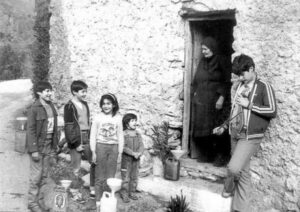 Children singing Kalanda (carols) on the eves of Christmas, New Year’s and Epiphany trace back to ancient Athenian rituals. But Cretan carols possess a distinctive character - accompanied by the Cretan Lyra and Laouto, our island’s core musical instruments, giving the songs rich, poetic quality with intricate rhythms.
The lyrics wish households not only health and long life but specific agricultural wealth: “plows of silver” and abundant harvests.
Most revealing is the Cretan tradition of retaliatory verses. If a host proves stingy with treats, young carollers possess culturally sanctioned permission to voice their disappointment through direct insults and public shaming. This transforms a religious custom into social governance, reinforcing philoxenia - the supreme Cretan value of unconditional hospitality and generosity.
Philoxenia: The heart of our celebration
Above all rituals, the underlying ethos of the Cretan holiday period is philoxenia - the profound “love of strangers.” At Avli, this principle guides everything we do.
During the holidays, we open our doors sharing the abundance of festive food and our curated selection of over 100 Cretan and Greek wines.
Our Tsikoudia, the traditional Cretan spirit of welcome, flows freely, serving as the essential social lubricant during gatherings.
Your festive period at Avli
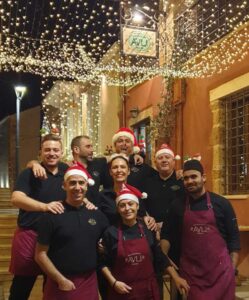 This holiday season, experience the Dodecahemeron as it was meant to be celebrated - in an 18th-century mansion where history lives in every stone, where bread is baked daily in a wood-fired oven, where ingredients come from our own cultivation and where every tradition connects you to the soul of Crete.
Our Holiday Offerings:
- Traditional Apaki as the perfect festive meze
- Rakomelo (warm, honeyed raki) to ward off winter’s chill
- Festive feasts featuring oven-roasted meats and seasonal vegetables from our farm
Join us for lunch or dinner throughout the festive period. Our kitchen is open daily 13:00–23:00 welcoming you to celebrate with Ygeía (good health), Eftychía (happiness), and Prosperous Efkairía (abundance).
Visit us at our historic mansion in old town Malia
Reserve your table:
+30 28970 31112 / +30 6980 844600 or https://tinyurl.com/avli-reservations
At Avli, we don’t just serve food - we serve centuries of tradition, one sacred meal at a time.