
In a landmark unanimous decision on 12 July 2025, UNESCO officially inscribed the six Minoan palatial centres of Crete, Knossos, Phaistos, Malia, Zakros, Zominthos, and Kydonia, onto the World Heritage List.
These palaces exemplify the cultural, political, economic, and artistic achievements of the Bronze Age Minoan civilization (circa 2800–1100 BCE)
All sites share defining architectural features:
- central rectangular courtyards, multi-story layouts, sophisticated drainage systems, staircases, and vivid frescoed interiors
- The inscription underscores the international heritage value of Minoan culture and Crete’s role as a cradle of early European civilization
Malia palace
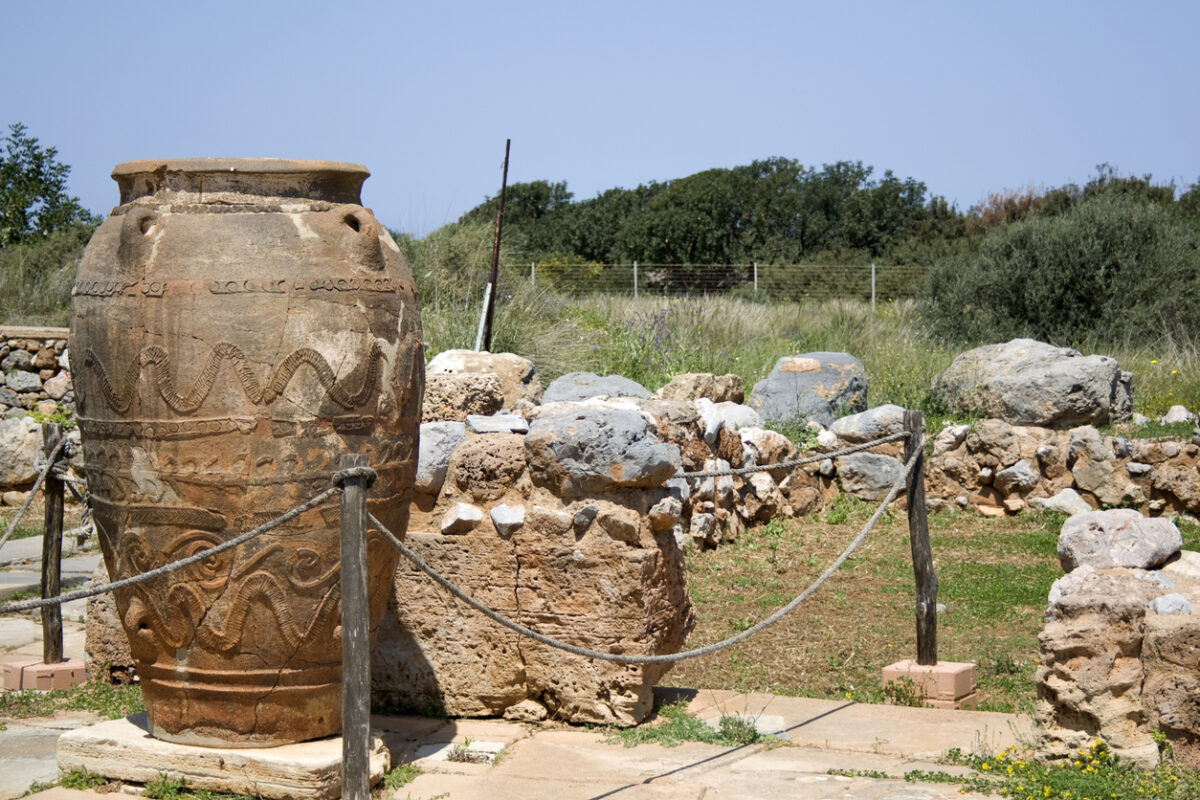
Constructed ~1900 BCE and rebuilt after destructions (notably around 1700 BCE), Malia emerged as Crete’s third-largest palace, featuring a central courtyard, four wings, royal rooms, workshops, storerooms with massive pithoi, and ceremonial spaces
Early excavations began in 1915 (Joseph Hazzidakis), and the iconic gold bee jewel was discovered in 1921—now housed in the Heraklion Archaeological Museum
Malia offers an intimate glimpse into Minoan royalty, craftsmanship, and urban life to historians, archaeologists and visitors. From the grandeur of the Hypostyle Hall to the mystery of the kernos stone, the palace’s ruins tell a powerful story of an ancient society that shaped European roots.
This UNESCO inscription cements Malia and its sister palaces as international treasures, ensuring that their legacy will be studied, preserved, and admired for generations to come.
At Avli, based just a breath away from ancient Malia palace, we’re proud to celebrate the land, the stories, and the legacy that surrounds us every day.